11 Chambers Street · Princeton, NJ


Waking up with a sore jaw, a dull headache, or teeth that ache for no obvious reason? Those mornings are worth talking about. Let’s take a careful look at your teeth, your bite, and what may be happening while you sleep.
Request a Consultation


TMJ treatment usually begins the same way: someone arrives with a tender jaw and no idea why. Often the answer is bruxism: clenching and grinding the teeth during sleep. Here, and across New Jersey, far more people are showing signs of it than in the past, and stress appears to be a major part of the story.
Patients usually search for this as TMJ or TMD, discomfort in the jaw joint and the muscles that move it. Either way, the first step is the same: a comprehensive evaluation, so we understand what your teeth and jaw are telling us before anything is recommended.
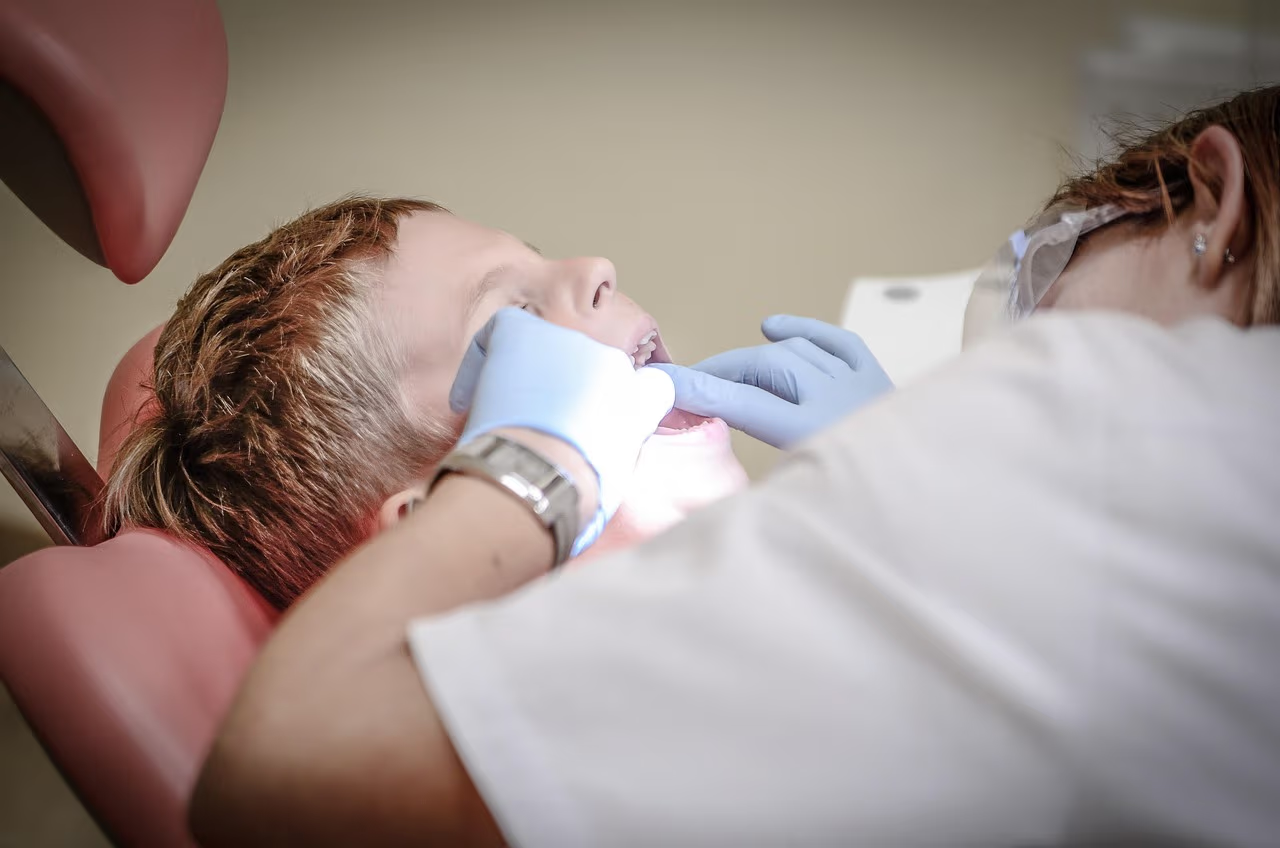
Bruxism is clenching the jaw during sleep, grinding the teeth together through the night. Several hours of force, every night, does a great deal of damage over time.
You may notice soreness in the jaw when you wake, morning headaches, teeth that hurt for no clear reason, or edges that look worn, flattened, or chipped. Some people find tiny bits of tooth material in their mouth; others hear about the grinding from a partner long before they feel it themselves.
We wrote about the rise in clenching and grinding in our post on stress and night guards.
The jaw joint hinges and slides, and a small cushion of cartilage, the disc, travels with it. When the disc slips out of position, the joint has to catch it on the way back: that is the click or pop many people hear when they open wide.
Inflammation in the joint can also sustain itself long after the injury that started it, a fall, a car accident, or years of nightly clenching, which is why calming it is one of the first things we work on rather than one of the last.
A disc that slides out of place and snaps back as the joint opens and closes.
An inflamed joint capsule, or tissue behind the disc taking a load it was not built for.
Pain that feels like it lives in your head but originates in the neck, and is treated accordingly.
There is no single answer for a sore jaw. There is a careful place to begin.
Your visit begins with a conversation, then an unhurried look at your teeth, your bite, and how your jaw moves. Dr. Shanni Reine-Mutch is a member of the Seattle Study Club, where cases are thought through as a whole.
The usual answer to grinding is a night guard: slim plastic, custom molded to keep the upper and lower teeth from meeting at night. It protects the teeth well, but a conventional guard takes up room in the mouth and can make sleep breathing harder, so we screen your airway and sleep first, then design the appliance around what we find.
If dental visits leave you tense, tell us. We offer nitrous oxide so an evaluation can feel calm and unhurried.

What the examination includes
Out of that comes a specific diagnosis, not simply “TMJ”, and then a plan. If your breathing looks disturbed, we refer you to a physician for a sleep study and provide oral appliance therapy under that order.
When the jaw joint itself is the primary problem, therapy usually means two-arch decompression orthotics, a daytime appliance and a nighttime one, to take pressure off the joint; when it is not, a single-arch appliance aimed at the symptom is often enough.
Therapy is a course of care, not a single appointment.
About a week after your appliance is delivered, we check the fit, the comfort, and how your jaw answered the first few nights.
Then regular visits, measuring your ranges of motion and asking you to rate your own pain; your number counts as much as our measurement.
Most courses of care reach maximum medical improvement in about twelve weeks: the point where further weekly visits are unlikely to change much.
From there we wean you off the daytime appliance in stages. Many people go on wearing the night appliance long term with periodic review.
We would rather tell you what we see at every visit than promise a result at the first one.
Jaw pain, clenching, and disordered breathing turn up in the same people far more often than coincidence would explain. A jaw braced forward all night to keep an airway open aches in the morning, so we evaluate the two together rather than one after the other.
Rather than chase a single symptom, we look at how your teeth meet and where they have worn, how your jaw and neck move, and how you breathe while you sleep. Dr. Shanni Reine-Mutch is trained and certified in the Olmos protocol through TMJ & Sleep Therapy Centre International, which treats the joint, the muscles, and the airway as one connected problem, not three separate complaints.
Not all of the work happens in a dental chair: your plan may include anti-inflammatory eating, range-of-motion exercises at home, physical medicine, and referrals to sleep physicians, ENTs, physical therapists, or myofunctional therapists when someone else is better placed to help. You will leave understanding what we saw and why it matters, and nothing begins until you do.
Request a Consultation
Generally speaking, the best cure for clenching is to de-stress. As any holistic dentist knows, too much stress is terrible for the body in so many ways: it raises blood pressure, puts people at greater risk of heart disease or stroke, and takes a real mental toll, making us more irritable and more prone to poor judgement. And, as we have seen, it can quietly damage your teeth as well.
That whole-body view is simply how we practice. You can read more about it on our biological dentistry page.
Request a Consultation