11 Chambers Street · Princeton, NJ

A sore jaw in the morning and a night of broken sleep are more closely related than most people expect. TMJ sleep therapy looks at the jaw joint, the bite, and the airway together, because how you breathe at night often shapes how your jaw feels when you wake.
Request a Consultation


TMJ sleep therapy starts from a plain observation: roughly one in three adults lives with a sleep-related breathing problem, a jaw or facial pain disorder, or both. They usually arrive as two separate complaints, a tender jaw here, a bad night’s sleep there, treated by different people in different offices. We start from a different assumption.
Through the night the head shifts, the tongue and lower jaw move, and muscles keep working, so the airway frames the whole evaluation here.
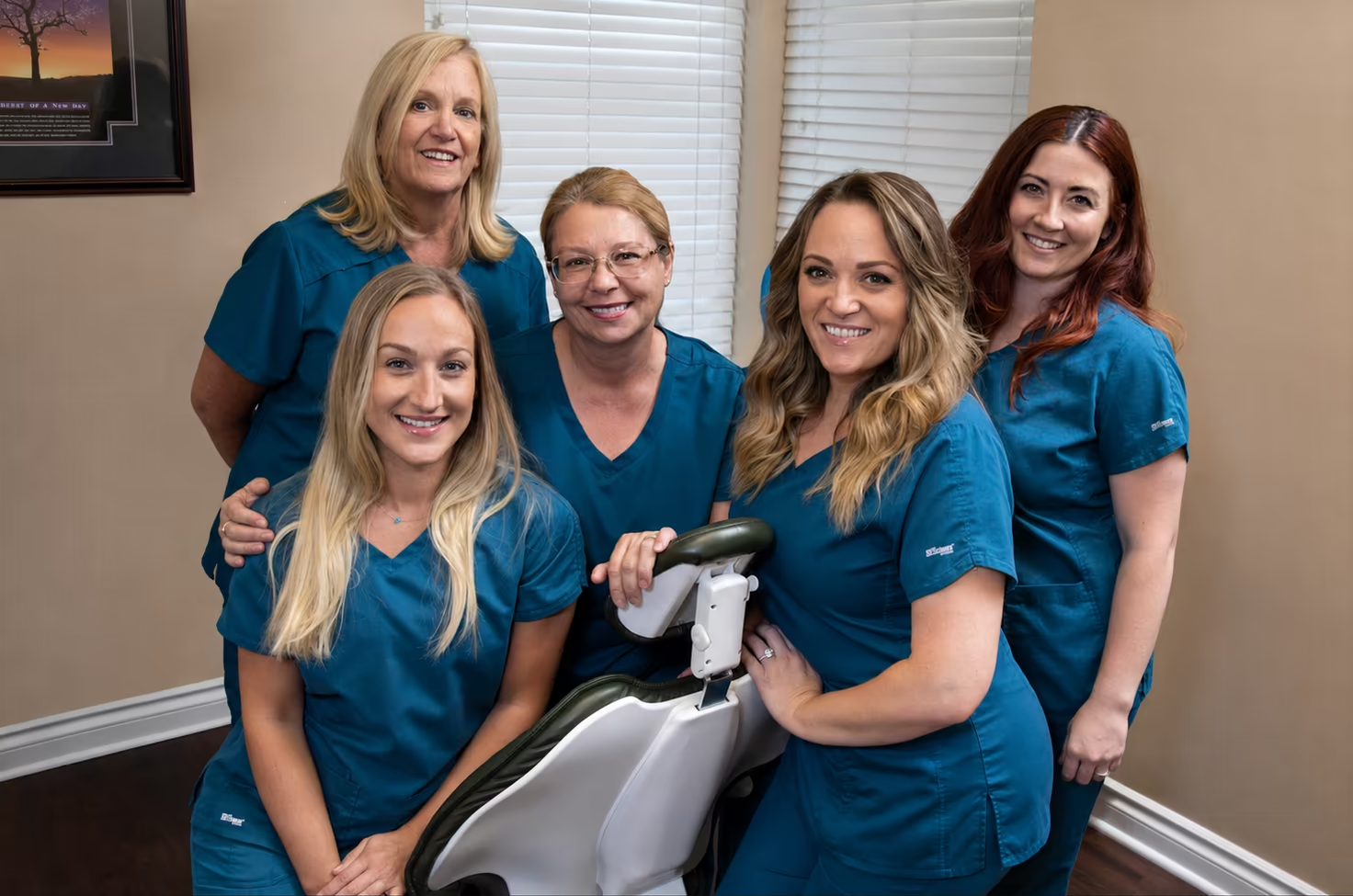
This is the approach developed by Dr. Steven R. Olmos, DDS, and taught through TMJ & Sleep Therapy Centre International. Dr. Shanni Reine-Mutch is trained and certified in it, and she leads this care at our Princeton practice.
Most people arrive through one of these two doors. The evaluation is much the same either way.
Soreness in the jaw, clicking or catching when you open, headaches that begin at the temples, teeth worn flat well before their time.
Explore TMJ & jaw painSnoring, broken nights, morning headaches, sleep that never refreshes. We screen, refer you to a physician for the diagnosis, and provide oral appliance therapy under that order.
Explore sleep therapyIt begins with a conversation: your history, your headaches, how you sleep, what you have already tried.
From there the examination is methodical: jaw opening and movement, neck rotation, an intra-oral look at wear patterns and how the teeth meet, palpation of the head, face, and neck muscles, photographs, joint vibration analysis of how each joint moves, and cone-beam 3D imaging, read for both the bony joint and the airway.
Sleep-disordered breathing is screened at the same visit, and only a physician can diagnose a sleep disorder, so we refer you for a sleep study when the screening points that way. A conventional night guard can make sleep breathing worse, which is why the airway is screened before any appliance.
The result is a diagnosis in plain language and a plan you understand before anything begins.
Request a Consultation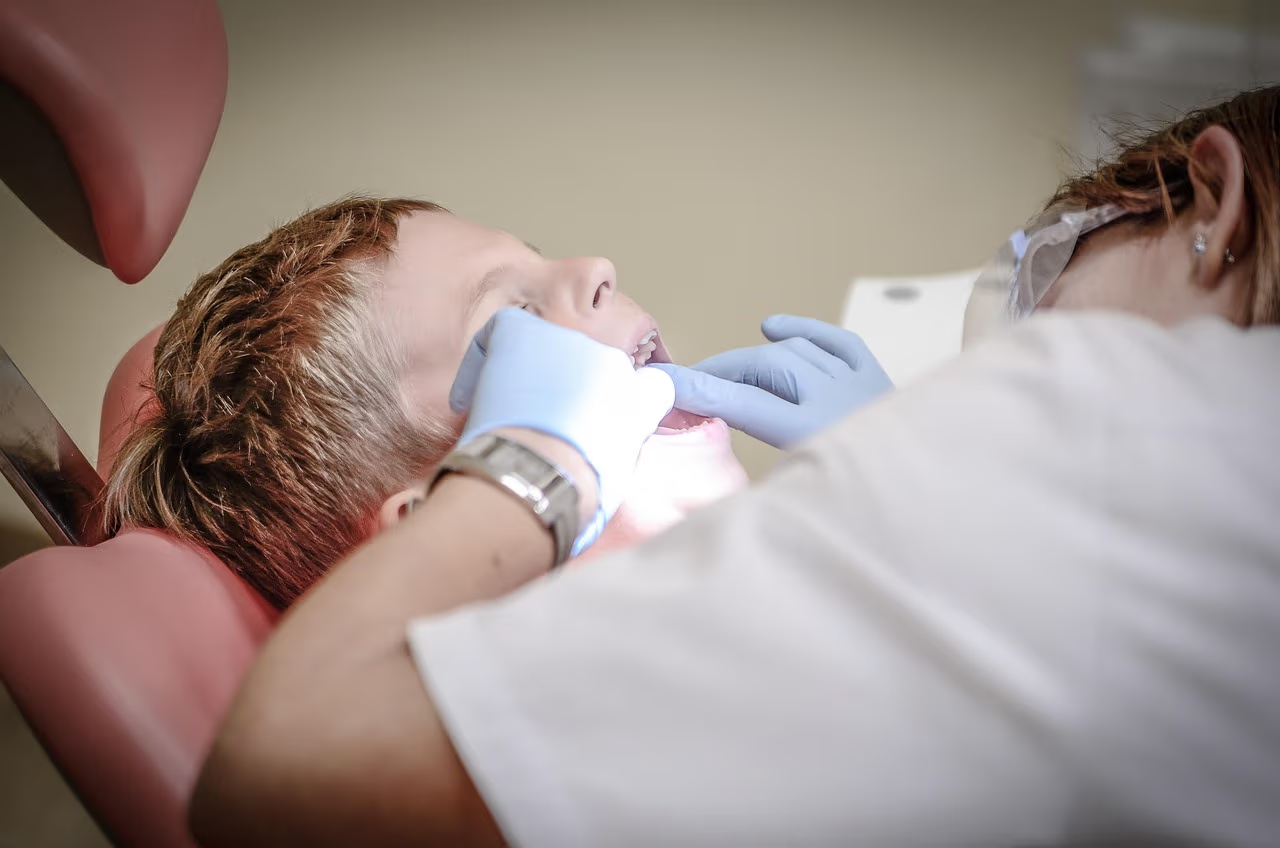
Whatever the diagnosis, treatment works along the same three lines.
An injury can leave the joint chemically irritated long after the event itself, which is why an old fall or car accident can still ache. Settling that inflammation comes first.
Hours of nightly force can undo progress as fast as it is made, so the appliance is chosen for your diagnosis rather than off a shelf.
If breathing is obstructed at night the jaw keeps working to solve it, so anything we make has to hold the airway open rather than narrow it.
The jaw joint sits at a busy crossroads: muscles, nerves, posture, sinuses, sleep. Some of what an evaluation turns up is not ours to treat, so we work alongside sleep physicians, ENT, physical therapy, chiropractic and osteopathic care, and myofunctional therapy, passing records back and forth so nobody is treating you from half a picture.
That whole-body view is not something we bolt on for this kind of care, it is how the practice works. Read more on our biological dentistry page.
Request a Consultation